


















Digital identity for Europe
EUDI wallets will be mandatory from 2027
With Nect, you can future-proof your setup early on: As an intermediary, we handle the integration and orchestration of wallets, identities, and credentials. Fully compliant with regulations and ready to use immediately.

At a glance
Facts about the EUDI Wallet
Implementation Deadline
The deadline for European countries to implement it runs until 2027
Digital Identity
Access for all European citizens to a trusted digital identity
Architecture Reference Framework
The ARF (Architecture Reference Framework) defines the technological standard and focuses on flexibility, efficiency, and future-proofing.
Cross-border Use Cases
Digital identification, qualified electronic signature (QES), and much more.
Our EUDI services
Nect in the EUDI ecosystem
Intermediary
- Provider of a connector or “verifier”.
- Trust Service Provider
- Acts on behalf of its customers.
Wallet
- Contains Personal Identification Data (PID)
- Extends electronic credentials with verified attributes (EAAs / QEAAs)
- Enables the use of qualified electronic signatures (QES)
Verifier
- One integration instead of many individual connections
- Standardized processing of all wallets and credentials
- Full transparency across all process statuses
- Control via an external system
ETSI 119 461 v2
eIDAS 2.0 certified, meets VDV & VDG requirements
Assurance level “high”
in accordance with BSI-TR 03147 and “equivalent to an on-site check” under eIDAS
Regulated industries and public institutions
What changes with eIDAS 2.0

From 2027
Obligation to provide
End of 2027
Obligation to accept
From 2027
Obligation to accept
Connector? Yes—but done right.
What users and companies really need:
- Identity
- Power of Attorney
- Commercial Register Extract
Or two of them are missing?
That’s where Nect comes in:
Our solution detects what’s missing, requests it specifically, and guides the user through the optimal flow—fully automated, user-friendly, and compliant with regulations.
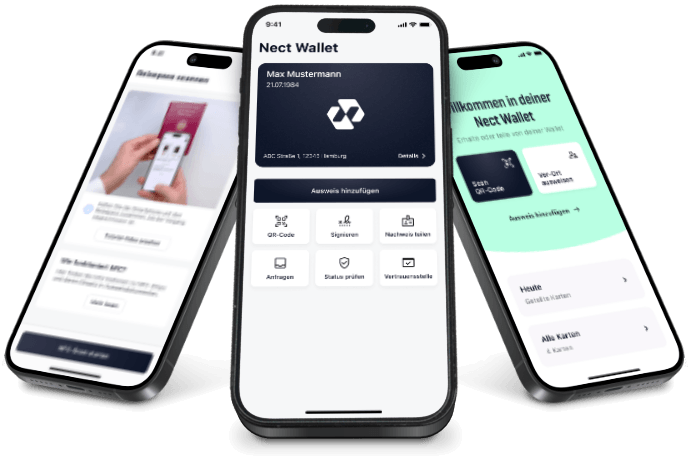
Concrete use in day-to-day practice
Simple attribute: referral from doctor to doctor
Patients prove their identity and insurance status and can then be referred directly.
Health ID for ePA, e-prescriptions, and TI Messenger
The Health ID forms the identity basis for applications and makes access to sensitive health services easier.
Access to statutory health insurance apps
The verified data enables secure login for telemedicine as well as the easy, EU-wide redemption of e-prescriptions.
Concrete use in day-to-day government operations
Digital access to administrative services
Citizens identify themselves via smartphone for online services—already in use in the Schleswig-Holstein service portal as a proven practical addition to the BundID.
Fully digital application and approval processes with electronic signatures
Processes such as i-KFZ are handled fully digitally, including identification and qualified electronic signatures for individuals and businesses.
Digital delivery of notices
Documents such as fee notices or social benefits are delivered digitally in a legally secure way and processed directly—without postal delays.
Concrete use in day-to-day finance
Fastlane contract conclusion
Thanks to the EUDI Wallet and qualified electronic signature (QES), even highly regulated contracts such as life insurance can be concluded digitally immediately, end-to-end, and without manual follow-up.
Fully automated re-KYC for existing customers
The AMLR, applicable from 2027, requires regular checks of existing customers every 1–5 years. The EUDI Wallet replaces lengthy postal processes with a fully automated real-time comparison of current PID data.
Integrated compliance checks
Verified wallet data enables automated sanctions and PEP checks in the background. A system-side audit trail ensures AMLR and eIDAS compliance without burdening the customer process.
All-in-Trust Service Platform for natural and legal persons
Trust & acceptance layer for highly regulated companies
AutoVideo Ident
Ident Procedure
eID
Ident Procedure
Identification via online ID function via NFC – secure, fast, and perfect for German users.
ePass
Ident Procedure
Nect ID Wallet
Ident Procedure
EUDI Wallet
Ident Procedure
EUDI Connector (PIDs)
Ident Procedure
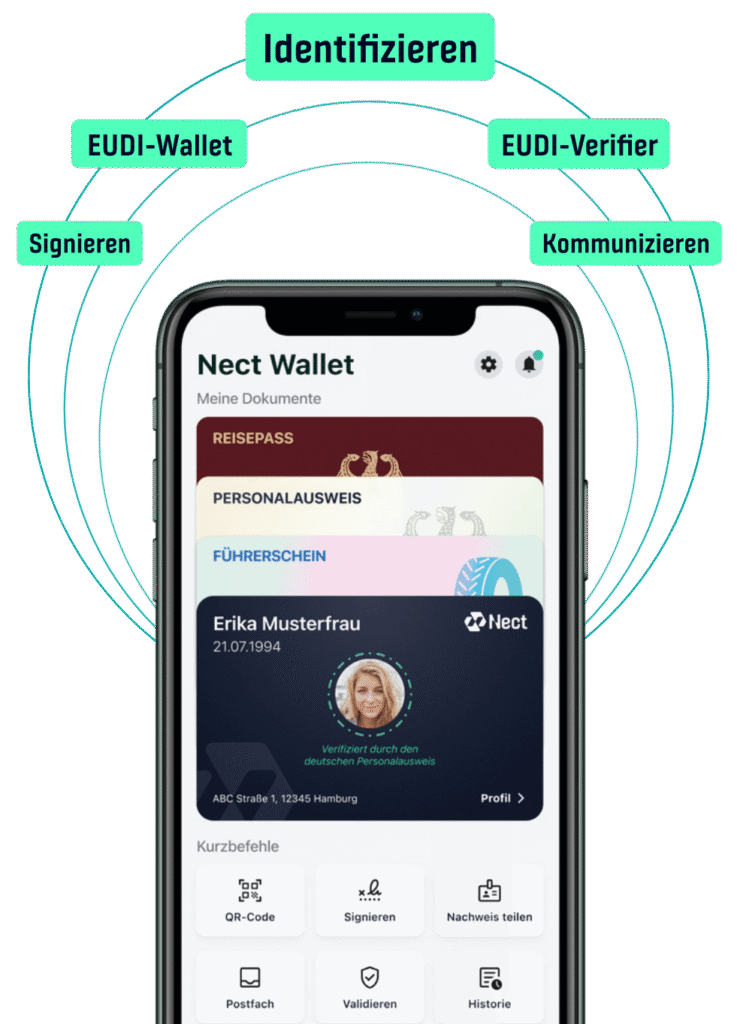
Nect as an intermediary
Early preparation for the EUDI obligation from 2027
Significantly reduced integration complexity
Standardized access to EUDI wallets and existing methods
Combination of wallet, identification, signature, and credentials
Leveraging an existing reach of over 18 million users
EUDI Wallet compatibility from 2027
No new app required
Over 18 million active users will be migrated automatically.
Reusability
of identity across all EUDI-compliant services.
Top-rated usability
over 170,000 reviews
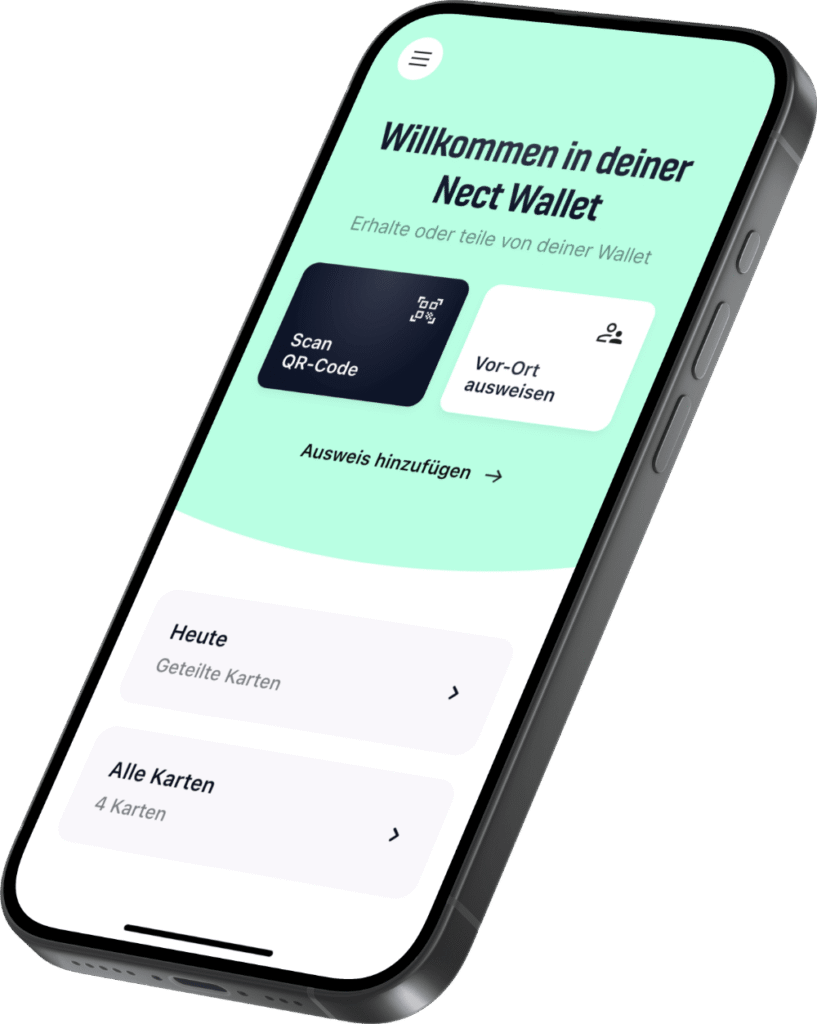
The key takeaways at a glance?
Our whitepaper clearly summarizes the content of this page and adds further information.

Compliance, Protection, and Scaling.
Effortlessly meet strict compliance requirements, prevent fraud, maximize conversion rates, reduce losses, and enhance security to create a secure, efficient, and revenue-generating customer experience.
Meet Compliance
Effortlessly meet even the strictest compliance requirements.
Combat Fraud
Prevent fraud and create a secure and pleasant customer experience.
Maximize Conversion Rates
Reduce abandonment and increase revenue.
Reduce Losses & Lower Costs
Increase operational efficiency through automation and tailored workflows.
Improve security & data protection
Optimize and adapt InfoSec processes to national and international requirements such as GDPR.